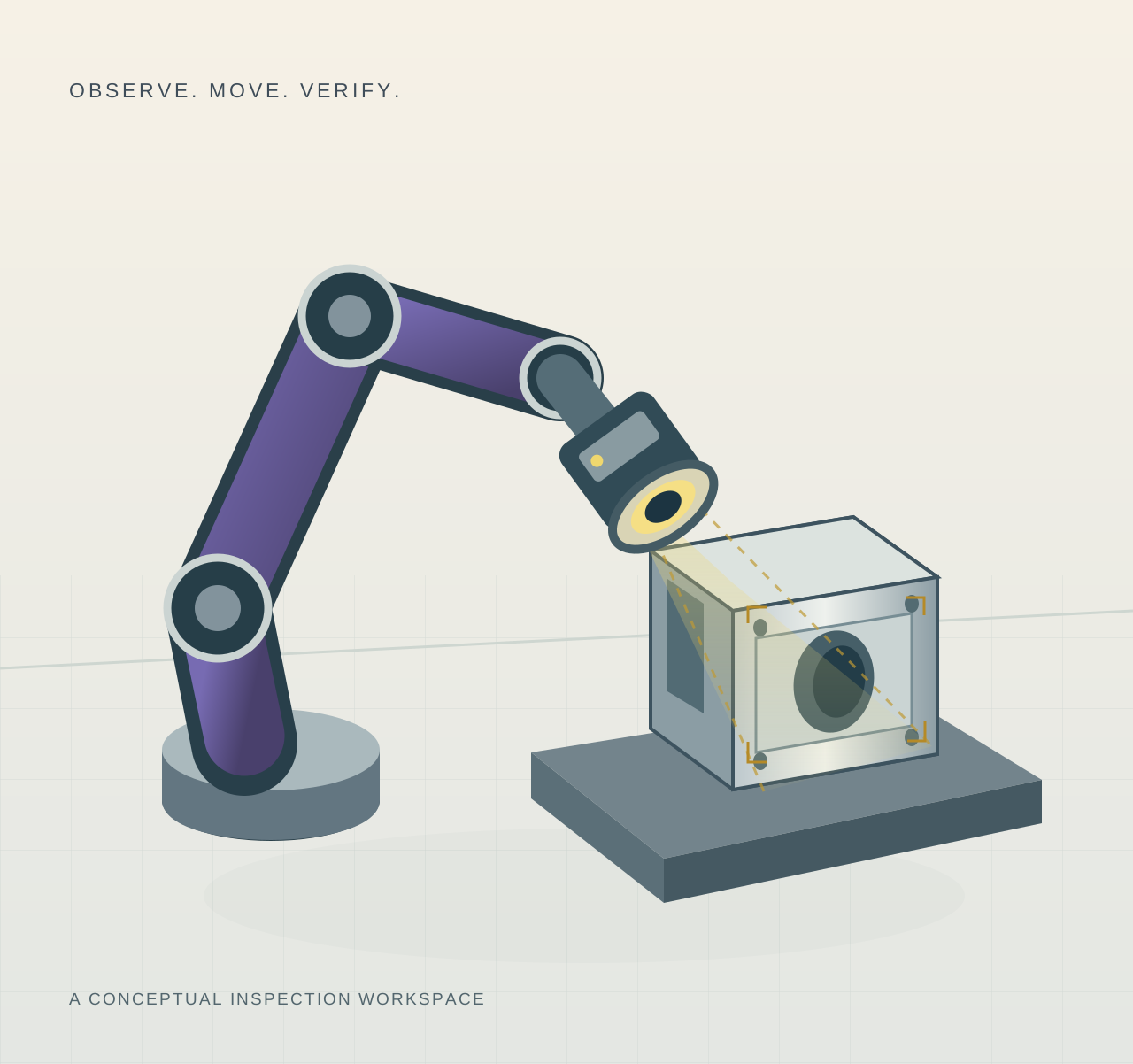
01 / Inspect
See what matters.
Inspect high-tech parts, identify defects and gather the measurements needed for a traceable decision. Adapt the viewpoint and lighting when the evidence is incomplete.
Explore intelligent inspection ↗ Physical AI Explorer
At the frontier of a new robotics breakthrough
Deep learning transformed image recognition. Foundation models opened new ways to work with language. Now these capabilities are meeting robot bodies, physical experience and feedback.
Explore the ideas, experiments and engineering choices that are turning AI into useful physical skills.
Make the range of useful applications grow faster than the engineering effort for each new task.
Industrial applications
Three familiar factory tasks. A shared ambition: handle more variation in products, workstations and instructions with less engineering for each new case.
Inspect high-tech parts, identify defects and gather the measurements needed for a traceable decision. Adapt the viewpoint and lighting when the evidence is incomplete.
Explore intelligent inspection ↗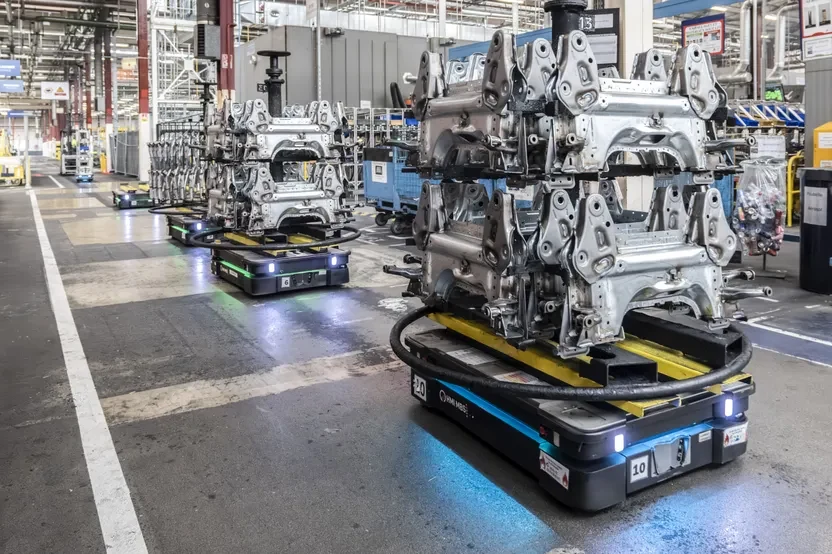
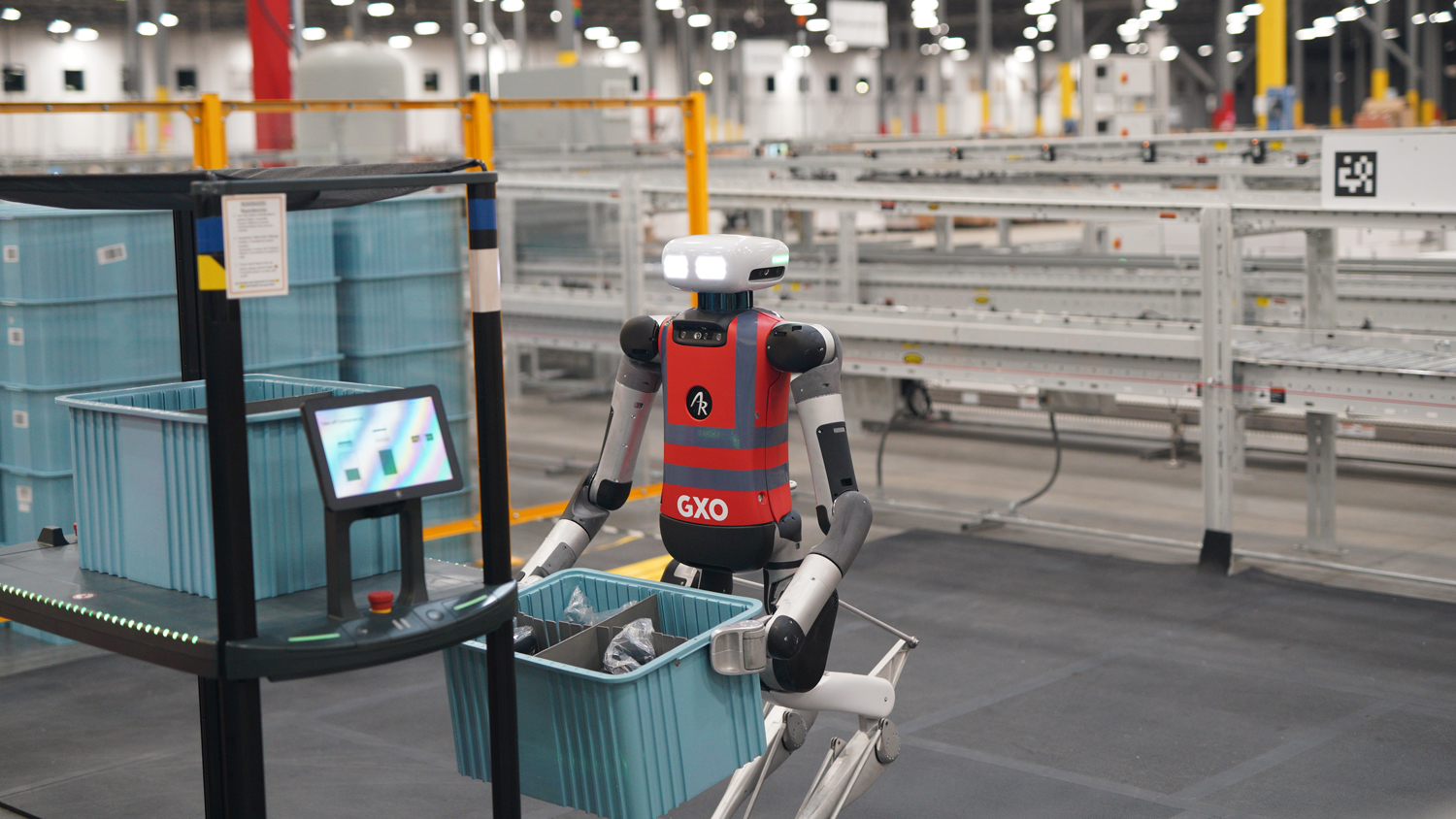
Move components, tools and containers between workstations. Connect navigation, handling and task understanding as layouts, destinations and production needs change.
Explore task understanding & planning ↗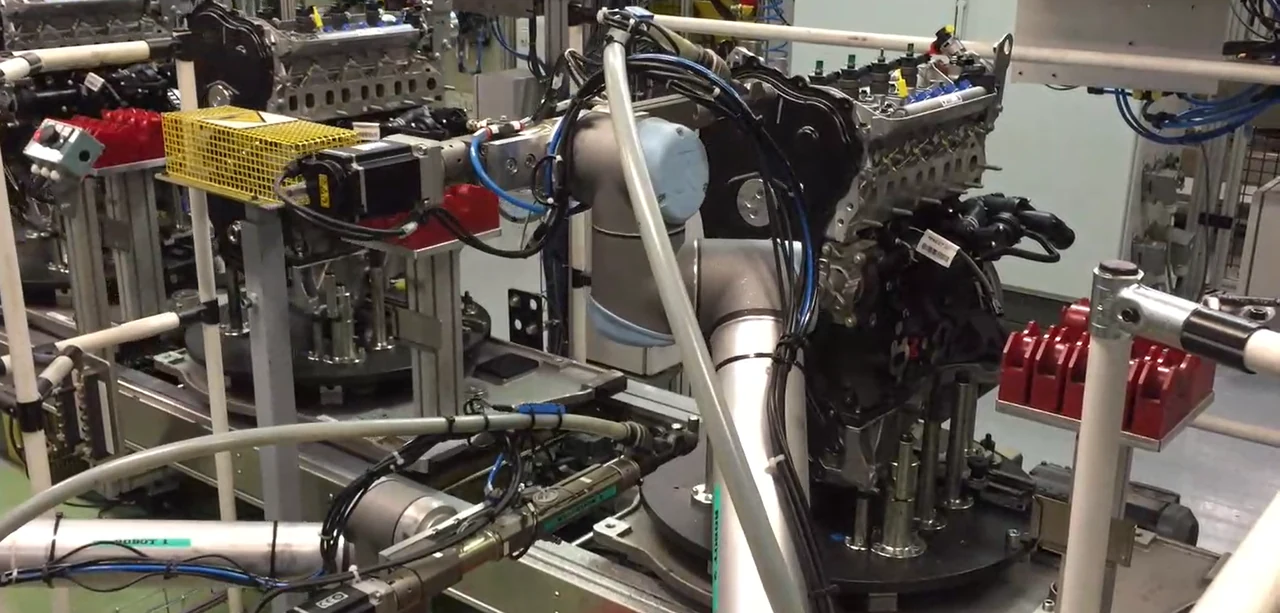
Pick, align, insert and fasten parts. Combine perception with force, contact and feedback to deal with tolerances and situations that a fixed trajectory cannot fully describe.
Explore learning through contact ↗Industrial application examples. The inspection illustration is conceptual; the photographs show external robot systems. The learning techniques explored here are a separate technology question.
The technology challenge
New products, short runs and changing workstations raise the effort of programming every variation. Physical AI explores how perception, language and learned skills can make more of that capability reusable.
The question is practical: which behavior should we engineer, which can a robot learn, and how do we know it will work in the real world?
Explore how robots learn ↗A short timeline of Physical AI
Follow the ideas that are now coming together: acting through a body, learning to see, learning from rewards, understanding language and acquiring physical skills. Select a milestone to explore the experiments.
From the home to the factory
Brooks showed how designed, reactive behaviors could produce useful action through ongoing interaction with the world. The iRobot and Roomba lineage helped make autonomous mobile robots part of everyday life.
The industrial ambition now reaches further: unfamiliar parts, coordinated contact-rich tasks and instructions expressed in human language. Learned perception, language-conditioned policies and simulated practice add new tools to the control engineer’s toolbox.
Several ingredients can now reinforce each other: pretrained perception and language, robot demonstration data, and large-scale simulated practice. The engineering opportunity is to reuse more of what a system has learned when the next task arrives.
Explore the full historical timeline ↗Research in motion
DeepMind connects perception and language to robot actions. Boston Dynamics brings learned behavior together with dynamics, contact and whole-body control.
Google DeepMind. From Atari's learned action values to RT-2 and Gemini Robotics, its research traces a path from learning in virtual environments to acting through robot bodies.
Boston Dynamics. Spot provides a deployed example of RL combined with MPC. Atlas's heavy-lifting research explores how a policy adapts through signals from the robot's own body.
Official research and engineering videos. Use the viewing questions and technical sources to separate a demonstrated behavior from validated production performance.
Questions for the factory floor
How can AI and robotics make industrial systems more capable, more adaptable and easier to deploy?
Inspection offers one way to examine that question: a robot must understand a task, gather useful observations, recognize missing evidence and select a better next measurement. Handling and assembly add further questions about contact, coordination and recovery.
Explore intelligent inspectionFrom sensors and actuators to world state, policies and control. Explore the hardware and the software together.
Explore hardware and software ↗Start with OpenAI’s Rubik’s Cube hand, then follow demonstrations, rewards and simulated practice.
Discover how robots learn ↗Why success in simulation is only a beginning—for robot arms, humanoids and Tesla’s driving systems.
Explore the reality gap ↗Continue exploring
Choose a question. Follow the mechanism. Watch the experiment.
Follow OpenAI from a dexterous hand to self-play, robot partnerships and a new robotics programme.
Follow the path from an image and an instruction to a robot’s next action.
Start with pixels and rewards, then follow DeepMind from DQN to self-play and learned planning.
Explore DeepMind’s video-to-simulation demonstration and the engineering questions behind it.
Discover dynamic world state: what is observed, inferred, moving or still unknown.
Explore LeRobot, desktop arms, mobile robots and legged research platforms.
The weekly field notes
Loading the latest edition…
Technology explorer / foundations to 2026
From Atari to embodied AI. Read the ideas, watch the experiments and try a learning loop, then connect them to robot control.